The Warmth Behind the Lines — A Designer's Perspective on European Cabinetry
European-style cabinetry is often described in terms of what it lacks — no face frame, no ornament, no excess. But in this West Los Angeles home, we found that frameless cabinetry is not about subtraction. It is about honesty. Wood, grain, and proportion allowed to speak without interruption.
Why European Cabinetry and Warm Wood?
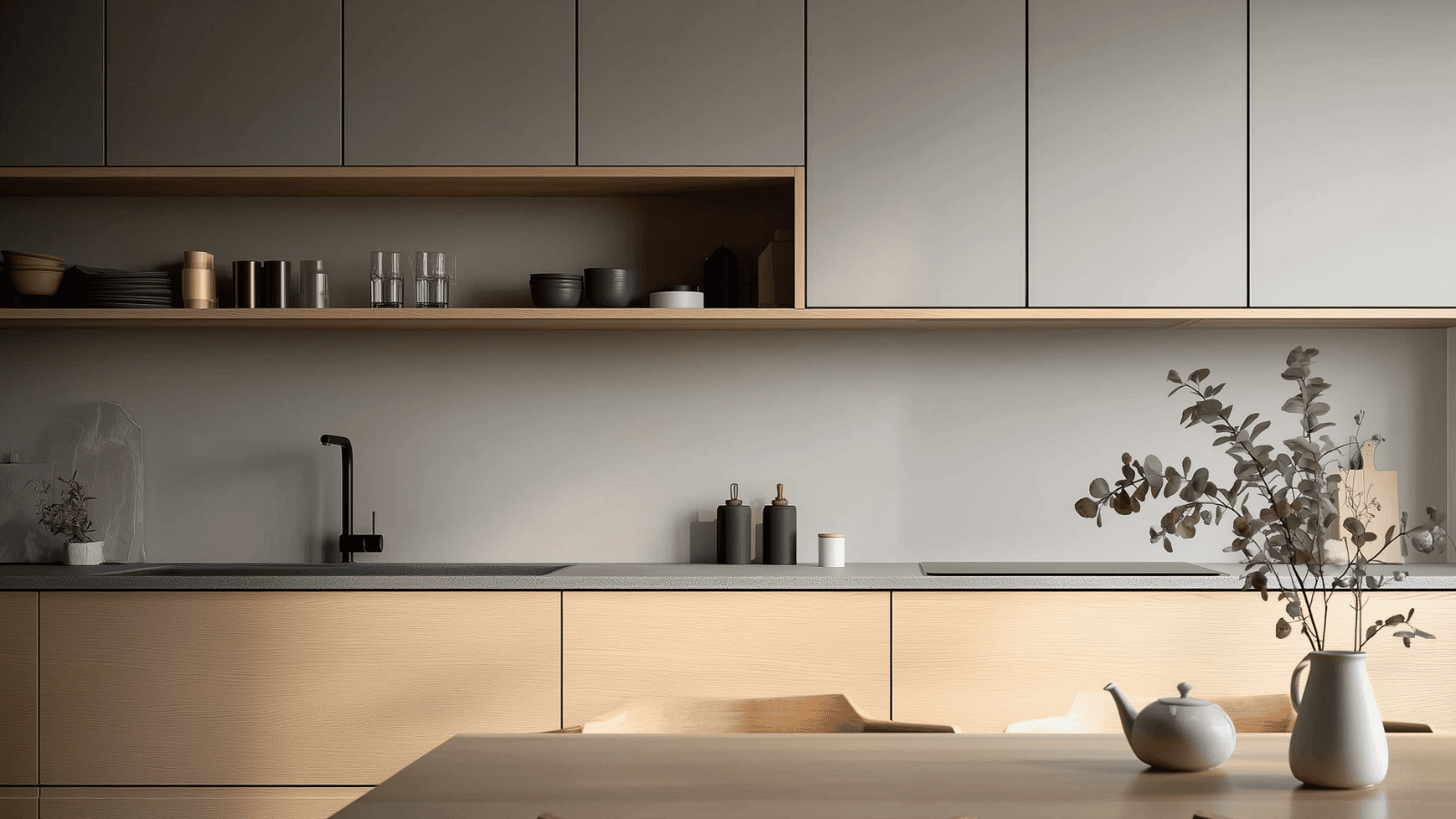
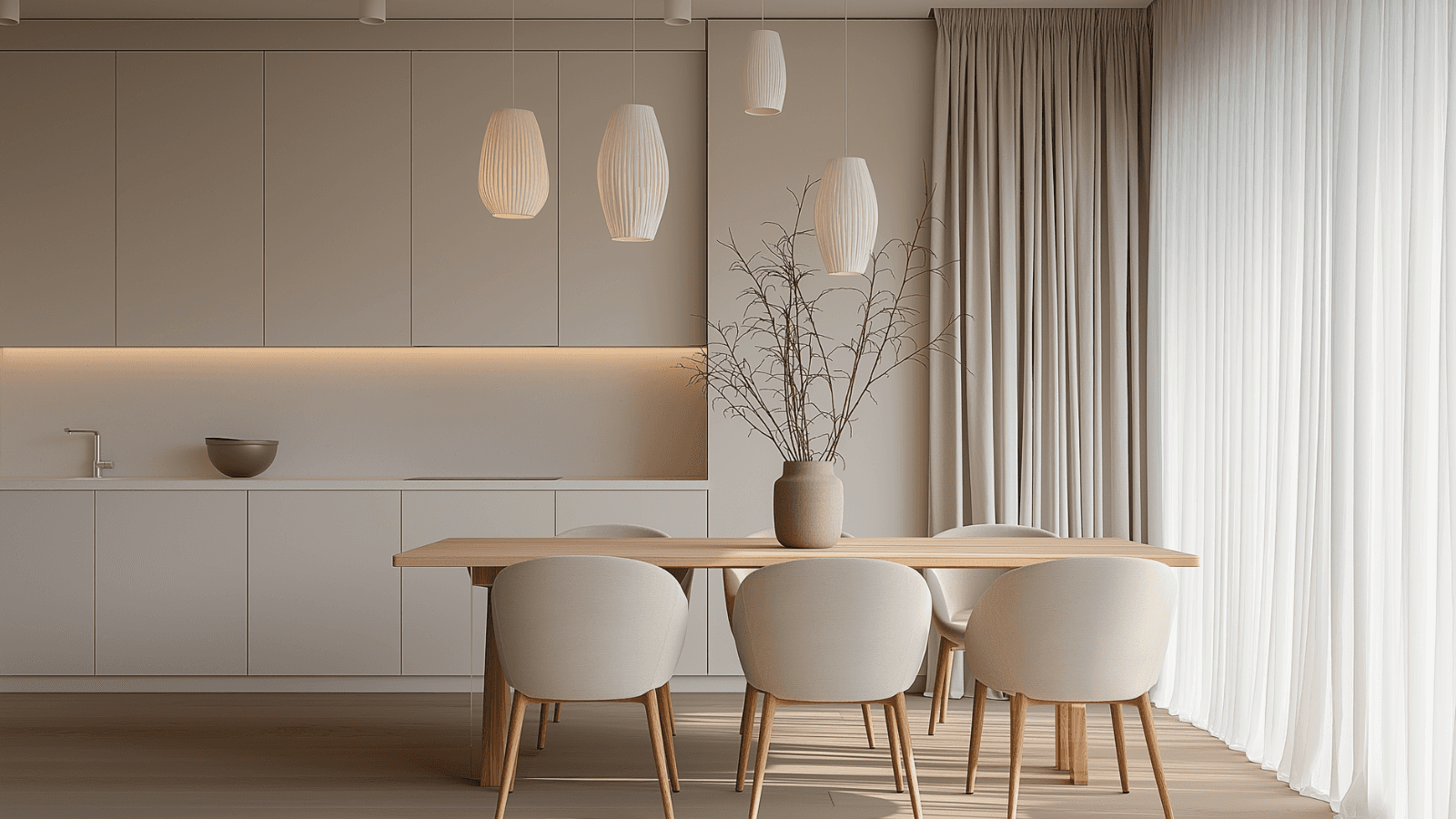
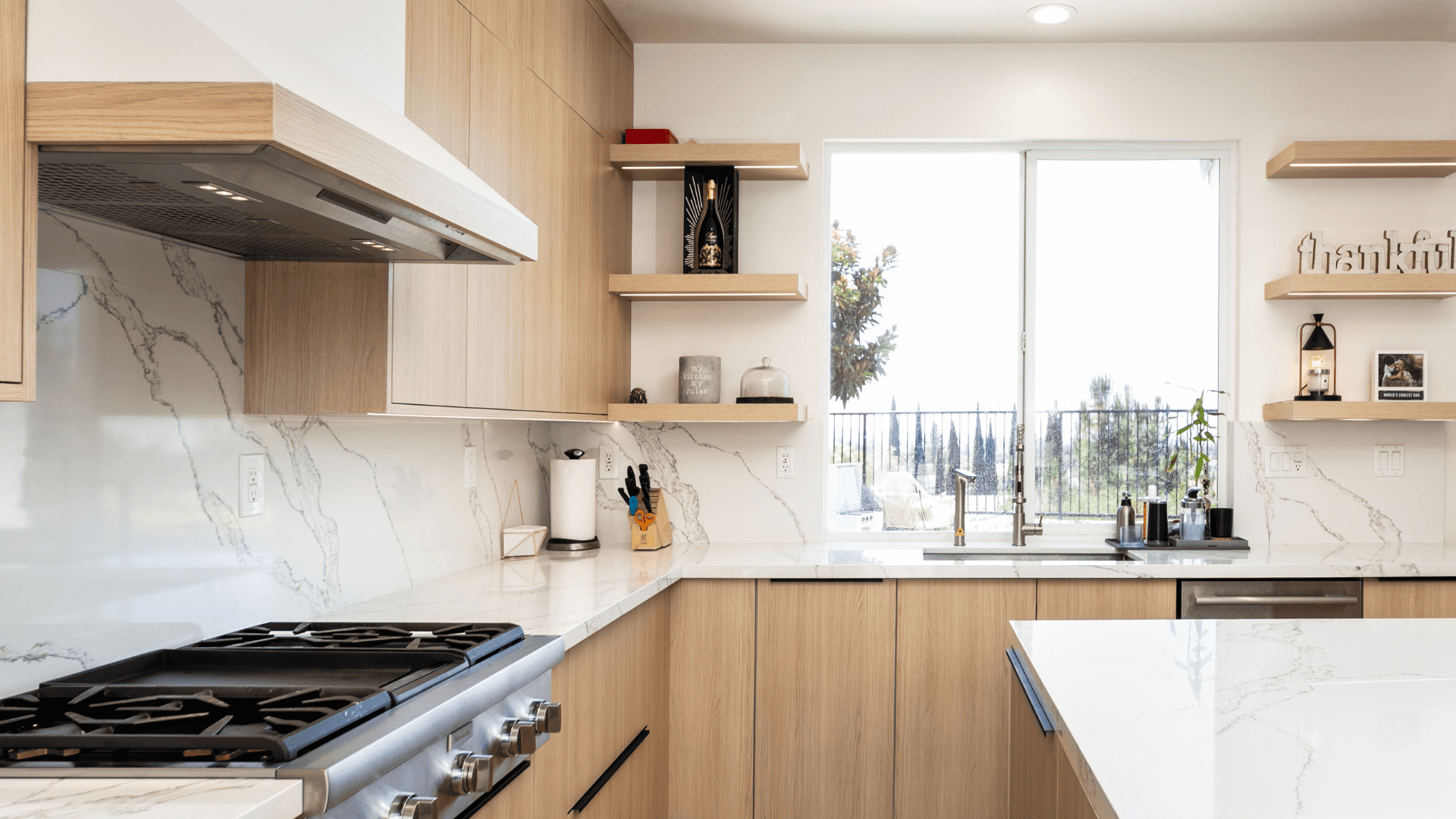
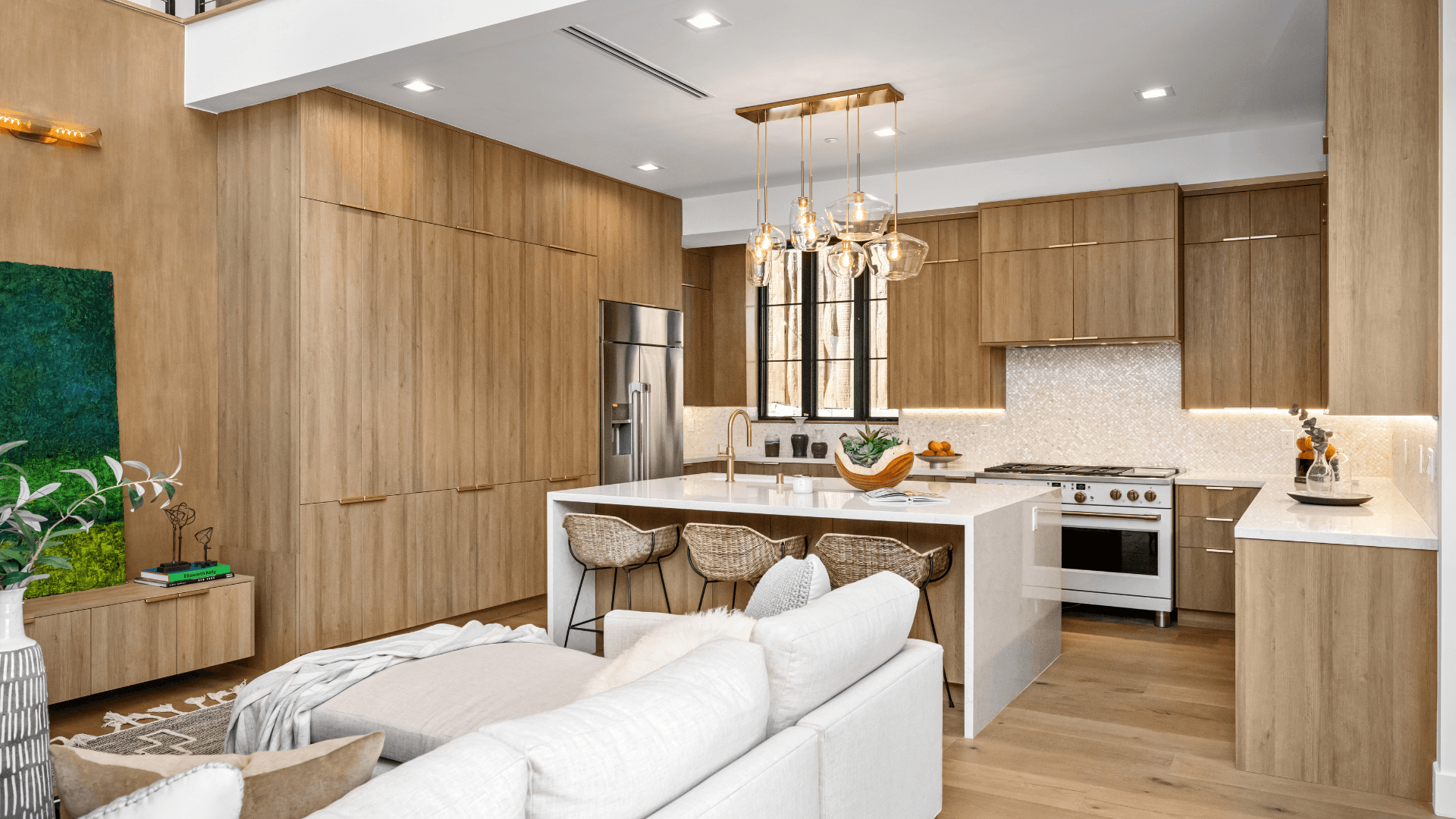
The decision to wrap this open-concept kitchen and living space in full-overlay, flat-panel cabinetry came from a desire for continuity. European frameless construction allowed us to eliminate visual breaks — the grain travels from panel to panel, floor to ceiling, uninterrupted. In a space where the kitchen meets the living room, that seamlessness is everything.
On Choosing Roble Golden
The finish had to be warm without being rustic. Roble Golden gave us exactly that — a golden oak tone with a linear grain that reads as contemporary and refined. Paired with brass hardware and pendant lighting, the cabinetry feels like it belongs to the home rather than sitting inside it. That is what European-style design does best: it integrates.
The Role of the Island
The white quartz island is an intentional contrast. In European kitchen design, the island is often the counterpoint — the place where material dialogue happens. Here, the clean white surface grounds the warmth of the surrounding wood and invites people in. The rattan stools carry that warmth back, closing the circle.
Designing for the Way People Actually Live
What we love most about this project is that it does not feel designed. The frameless cabinetry disappears into the architecture. The living and kitchen spaces breathe together. European cabinetry, at its best, should never announce itself — it should simply make life feel better.